
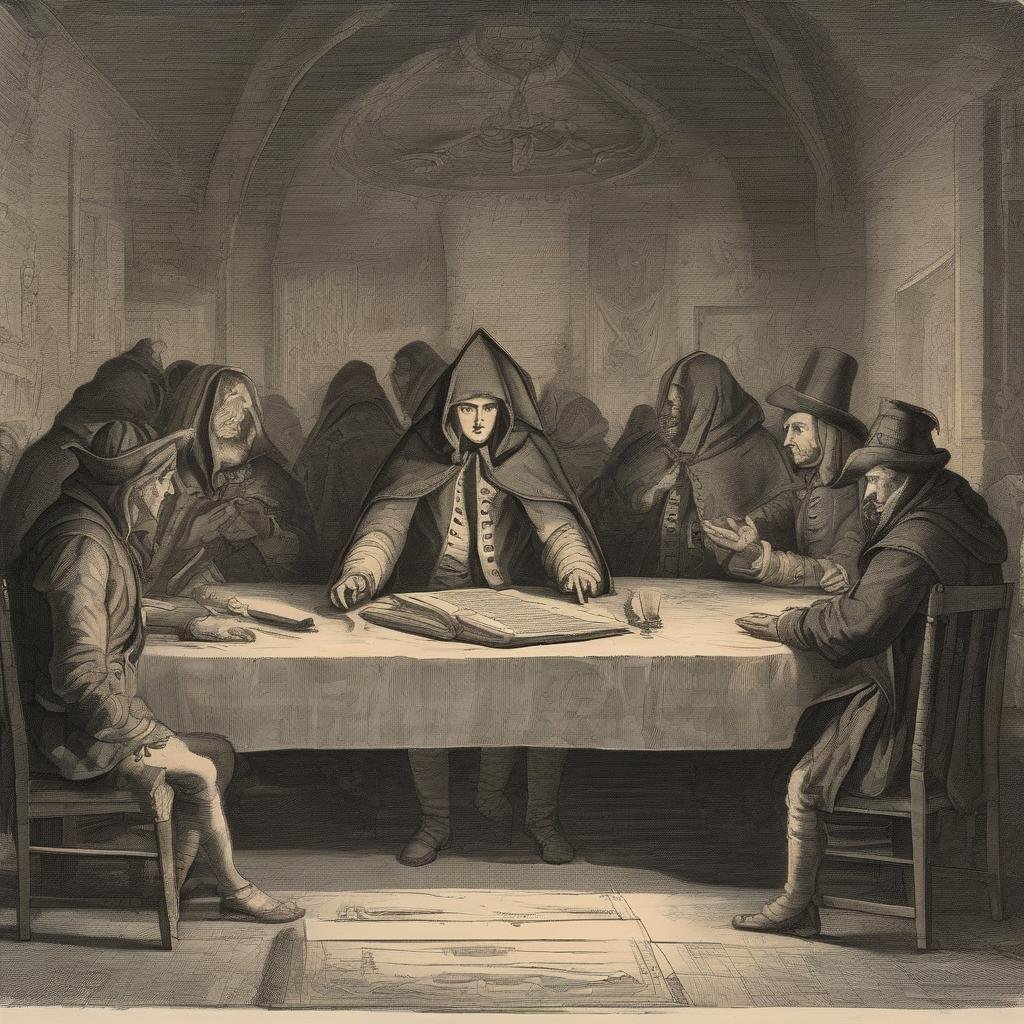
Illuminati?s Internal Governance & Secret Rules
“`html
Illuminati’s Internal Governance & Secret Rules
The Illuminati, founded in 1776 by Adam Weishaupt, remains one of history’s most enigmatic secret societies. While much has been speculated about their influence, their internal governance and secretive regulations were meticulously structured to maintain control, secrecy, and ideological purity. This article delves into the organizational hierarchy, initiation rites, and clandestine rules that defined the Illuminati’s operations. Understanding these structures provides insight into how the society functioned and why it became so feared—and mythologized—throughout history.
The Hierarchical Structure of the Illuminati
The Illuminati operated under a strict hierarchical system designed to compartmentalize knowledge and ensure loyalty. Members were divided into three primary classes, each with its own sub-levels:
1. The Nursery (Novice Class)
New recruits entered as “Novices” and progressed to “Minervals” after proving their dedication. This stage involved basic philosophical instruction and tests of obedience. Members were kept unaware of the society’s deeper goals to prevent leaks.
2. The Masonic Class (Symbolic Freemasonry)
This tier mimicked traditional Freemasonry, with ranks such as “Apprentice,” “Fellow,” and “Master.” Here, members were introduced to symbolic rituals and allegorical teachings, though the Illuminati’s true agenda remained concealed.
3. The Mysteries (Inner Circle)
The highest echelon included the “Priest” and “Regent” ranks, reserved for those deemed trustworthy enough to know the society’s ultimate objectives. Only a select few reached this level, where they participated in advanced political and philosophical discussions.
This structure ensured that only the most loyal members gained access to sensitive information, a tactic later adopted by other secretive organizations. For more on the historical backdrop of the Illuminati, see our article on The Enlightenment in Bavaria.
Secret Rules & Codes of Conduct
The Illuminati enforced strict rules to maintain secrecy and discipline:
1. Absolute Secrecy
Members swore blood oaths never to reveal the society’s existence or teachings. Violators faced severe consequences, including reputational ruin or worse.
2. Blind Obedience
Lower-ranking members were expected to follow orders without question. This ensured smooth operations and minimized dissent.
3. Surveillance & Reporting
Each member was required to submit detailed reports on their activities and those of their peers. This created a culture of mutual suspicion and reinforced control.
4. Controlled Communication
The Illuminati used ciphers, pseudonyms, and invisible ink to communicate. Adam Weishaupt himself went by the alias “Spartacus.”
Initiation Rites & Psychological Conditioning
Becoming an Illuminati member was no simple task. The initiation process was designed to test loyalty and reshape thinking:
1. Symbolic Rituals
New initiates underwent ceremonies involving blindfolds, symbolic challenges, and oaths of allegiance. These rituals reinforced the society’s mystique.
2. Gradual Revelation of Secrets
Knowledge was dispensed in stages. Only after years of service could a member learn the society’s true aims—preventing defectors from exposing too much.
3. Indoctrination Techniques
Members were taught to reject traditional religious and political structures, embracing instead the Illuminati’s vision of a “new world order.”
These methods ensured that the Illuminati remained a tightly controlled organization, capable of operating in the shadows for years. For further reading on their historical context, explore The Enlightenment in Bavaria.
Conclusion: The Legacy of Illuminati Governance
The Illuminati’s internal governance was a masterclass in secrecy and control. Their hierarchical structure, strict rules, and psychological conditioning allowed them to operate covertly while shaping members’ ideologies. Though the society was officially disbanded in the late 18th century, its methods influenced later secretive groups, and its legend persists in modern conspiracy theories. Understanding their governance helps demystify the Illuminati, separating fact from fiction.
Frequently Asked Questions
Did the Illuminati really control world events?
While the Illuminati had political ambitions, there is no concrete evidence they controlled global affairs. Their influence was likely exaggerated over time.
Are there modern Illuminati groups?
Some organizations claim descent from the original Illuminati, but none have been verified. Most are either hoaxes or loosely inspired by the mythos.
How did the Illuminati fall?
Bavarian authorities banned secret societies in 1785, forcing the Illuminati to disband. Internal divisions and external pressure contributed to their decline.
“`